Showing posts with label first. Show all posts

Thursday, September 02, 2010

Selecting a sewing machine

Sooner or later, any gal who gets excited about sewing will have a big decision to make: what kind of sewing machine should she buy? Since I teach sewing classes, I get asked this question a lot. And let me tell you, it's a tough question to answer without getting long-winded. But here's my response, in as few words as I could muster.

New or Used?

First, do you want a new or a used machine? Many sewing machine shops will carry gently used machines that customers trade in. These machines have been recently serviced and may come with a 30-day warranty. In many cases, older machines that were well-built in the first place will be more reliable and more affordable in the long run than an entry-level machine from your local big-box store.

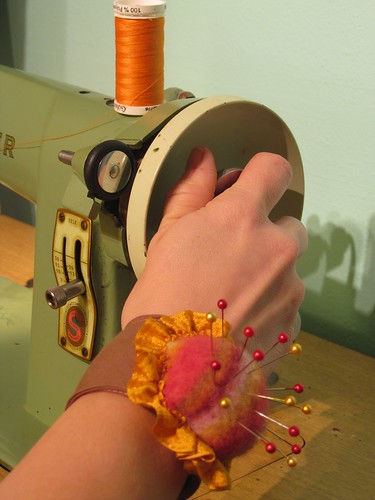
You can also watch Craigslist, yard sales, and thrift stores for used machines, though you should be aware that some may require a little professional help if they're not performing at their best. A tune-up will typically set you back about $50-$100. I have several used machines that I let students use in class -- a modern entry-level Janome, a Brother from the 1980s, and Brother, Singer and Elna machines from the 1950s. I picked up  all but one of them at yard sales and thrift stores. And yes, all of them still sew like a dream.
IMG_3699

As for new machines, I'm not a big fan of the ones that cost around $100 at Wal-Mart, Jo-Ann, or other big box stores. Most of the time, they're pretty clunky in how they operate, which makes for a less-than-enjoyable sewing experience. And a huge part of sewing is that we don't want to be stressed out while we're doing it, right? We sew because we want a fun, creative break from all of the other obligations in our lives. These machines are usually made with plastic parts inside, meaning that they generally will not hold up well over time. Of course if you're on a tight budget, they're definitely better than nothing.

But if you're able to spend a little more now, chances are that you'll end up with a machine that will last for years and years with minimal upkeep. For example, I'm still using the sewing machine I bought in 1994 for $450 and it still runs great. It's a Husqvarna Viking and I have absolutely loved it. Other people I know swear by Bernina machines. And Janome definitely seems to be an up and coming brand that has some good quality, affordable machines.

Recycled sewing table

Features

It can be tempting to buy fancy machines with lots of stitches. However, I have to tell you that as much as I sew, I primarily use only two stitches -- the straight stitch and the zig-zag stitch. It's kind of like how car dealers always brag about how many cupholders a car has, but after you buy the car you realize that you only use one of them. If you think that you'll want to use your machine to hem pants or skirts, then a blind hemming stitch would also be helpful for you. And many machines offer special stretch stitches that work well with knit fabrics like lycra and cotton jersey.

Need more info?

I hope that this post has answered at least some of your questions about buying your first sewing machine. If you're looking for other opinions, plenty of other sites have covered this topic, including Sew, Mama, Sew, Prudent Baby, and CraftStylish, among others.

And if you're an experienced sewist, feel free to leave a comment if you feel I left anything out or if you have any other advice for budding sewers.

Happy sewing!

--------------------

Addendum: I didn't mention it in the original post, but visiting a local sewing machine dealer can be incredibly helpful. The sales staff can help guide you to a machine that will suit both your needs and your budget, and you can test-drive any machine to see how it feels for you personally.  If you buy a machine from a dealer, the machine will come with a warranty and you also typically get a free lesson on how to use it. And your dealer will be able to help you down the road if you ever decide to buy additional accessories  like a ruffler or rolled hem foot (both of which can be helpful for some projects).

Thursday, November 12, 2009

So it's your first craft show...

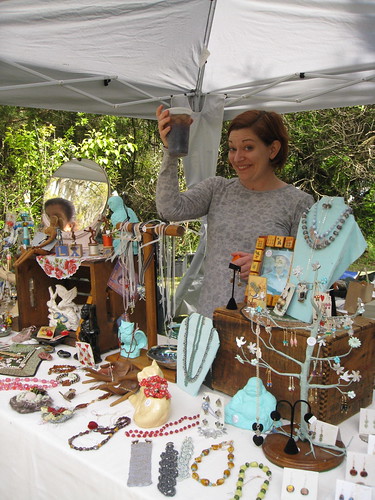
The holiday craft show season is upon us! While some crafters are seasoned veterans on the craft show circuit, others are gearing up for their first shows. The picture on the right is from my own craft show debut. I've learned a lot since then so I figured it might be nice to share some tips. You can also find a great post full of craft show tips from the folks at Etsy.com.

1. Bring a tool kit
Okay, so you may not need a screwdriver or hammer, but it does help to pack a few tools of the trade. My tool kit is a vintage train case that includes receipt books, pens, Sharpies, scissors, safety pins, a glue stick, extra price tags, clothespins (great for attaching informational signs to products), business cards, and a bank to make change from.

Some people like to wear an apron that has pockets and stash their cash there. The OCD part of me can't stand all of those loose bills getting jumbled up. Instead, I use a coupon organizer to keep all of my ones, fives, tens, and twenties organized so that I can make change quickly. Speaking of which, be sure to come prepared with plenty of $1 and $5 bills, since people typically arrive with a stack of $20 bills fresh from the ATM.

You'll also need to bring some sort of bags for your happy customers to put their purchases in. I use plain brown bags with handles and then tie on a few pieces of vintage ricrac or hem tape in advance to give them a personal touch. And of course, always include a business card with every purchase. That way if people like your products, they'll know how to contact you for more. If you have an Etsy shop, consider adding a coupon that offers a percentage off of any sale within the next month. This can be a great way to drive new people to your Etsy site.

2. Sell the sizzle
You'll no doubt be surrounded by other talented crafters, so it's important to make your table/booth stand out. The goal is to make people want to cross a crowded aisle just so that they can scope out the amazing things that might be tucked into your booth.

Christie Adams, jewelry designer extraordinaire!
I can still remember the first craft show booth that blew me away. It belonged to Christie Dickens, aka "Evon's Muse." You may recall that I blogged about her back in April. Christie incorporates vintage linens, books, and other items to give her booth a comfortable feel, making it seem like you just stepped into some funky granny's living room. You don't have to use vintage items, but try to use fabric and other elements to give your booth its own cohesive feel.

Christie also elevates some of her items using old wooden crates. This is great because people appreciate not having to stoop over to look at items that are laid flat on a table. And again, giving your booth some height can help it stand out from the others.

Make sure you bring something to cover your table(s) with. I typically spread a cute vintage table cloth over a larger, basic white tablecloth. The vintage cloth adds personality while the white cloth allows me to hide extra junk under the table. Bed sheets work great, too.

And before you leave the house, do a test run. I cannot stress this enough. Try setting up your stuff on your dining room table. Play with the placement of things. In some cases you may not have much time to set up your booth before shoppers arrive, and if you've practiced at home then you'll be able to set up your booth lickety-split and still have it look fabulous.

For more inspiration, visit the SHOW ME YOUR BOOTHS group on the photo sharing site Flickr.com.

3. Think big (and small)
It's a good strategy to have items available at different price points. If you're a mixed media artist whose specialty is large-scale collages, chances are they may be beyond the budget for some shoppers. An easy way to create lower-ticket items would be to scan or photograph the collages and print them onto greeting cards, magnets, or journal covers. Less expensive items also provide shoppers with a comfortable entry point to your work. They may buy something small this year, decide they like it, and then buy a more substantial piece down the road.

4. Tell your story
As a general rule, people who come to craft shows do so because they prefer to buy things that are made with love by real-life people. They often enjoy hearing about your creative process and inspirations. For example, I make most of my items out of recycled materials and typically use small signs to tell the story behind the final product. I love seeing the look on a shopper's face when he or she learns that the jewelry box they're looking at was made from an old waffle iron. I have found that these little signs can help shift people from window shoppers to true customers.

5. Make friends
This is important for several reasons. (1) Your booth neighbor might be willing to keep an eye on your booth when you head to the loo, which is bound to happen at some point in the day. (2) Crafters like selling their wares, but they also love checking out what other crafters make. This means that your fellow crafters are also your potential customers. (3) The connections you build with other crafters can lead to future business opportunities. As a result of conversations I've had with fellow crafters, I've booked workshops and found new stores that are interested in carrying my items.


So now that you've learned the inside secrets, what are you waiting for? Get on out there! And above all remember to have fun.

LinkWithin

Blog Widget by LinkWithin